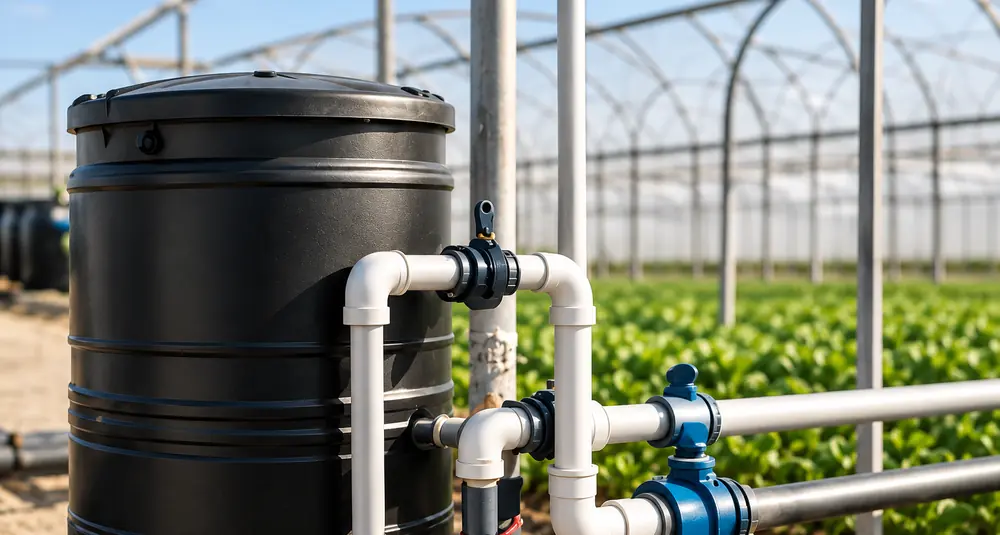
A tank mix is a chemical reaction you are running in the yard, usually in a hurry. Most application failures that get blamed on the product are decided in the ten minutes it takes to fill the tank.
1. Ignoring the order of addition
Products go in by formulation type, not by whichever drum is nearest: water conditioners first, then water-soluble packets, dry and water-dispersible granules, suspensions, soluble liquids, emulsifiable concentrates, and adjuvants last. Reverse that order and you are asking insoluble material to disperse into a solution that is already loaded.
2. Filling the tank only half full — or completely
Start with the tank roughly half to two-thirds full of water and the agitation running. Adding concentrate to a nearly empty tank creates local concentrations high enough to precipitate; adding it to a full tank leaves nowhere for mixing energy to go.
3. Treating calcium and phosphate as compatible
Calcium plus phosphate, and calcium plus sulphate, precipitate. The white sludge at the bottom of the tank is the nutrient you paid for, and the price includes a blocked filter. Separate the applications.
4. Forgetting the water itself
Hard, alkaline irrigation water is a reagent, not a solvent. High bicarbonate and high pH destabilise chelates and degrade sensitive actives. Test the water and condition it before the first product goes in.
5. Mixing micronutrients with anything at high pH
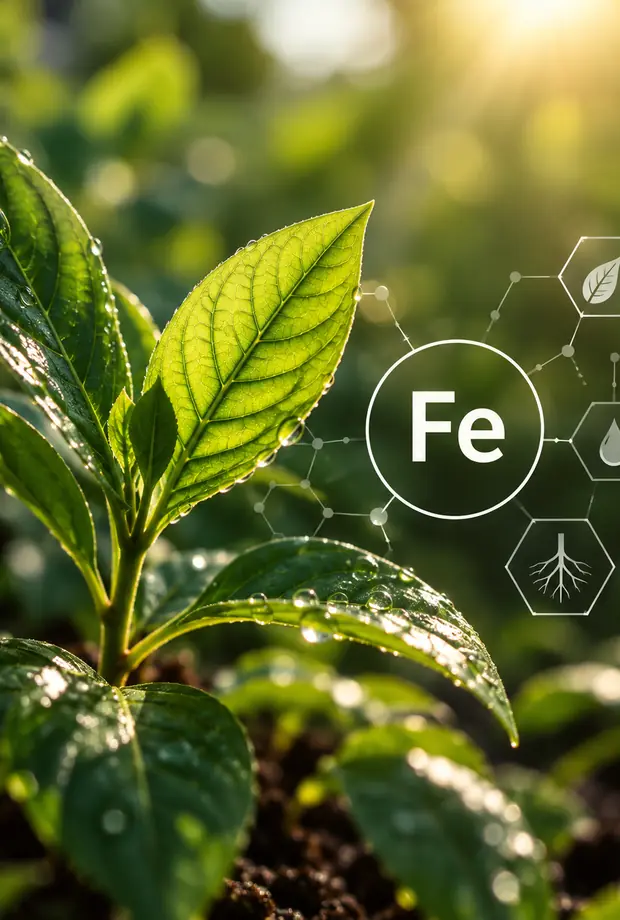
Chelated micronutrients survive a narrow pH range. Raise the pH of the tank and the metal is released, precipitates, and never reaches the plant — while the label still promises 6% iron.
6. Letting the mix stand
A mix is stable for hours, not for days. Sedimentation, separation and reaction all continue in a parked tank. Prepare what you will apply, and keep agitation running until the tank is empty.
7. Skipping the jar test
Ten minutes and a glass jar, mixing the same products at the same relative rates in the same water, will predict almost every failure above. Watch for precipitate, gel, cream, flakes or heat, and let the jar make the decision instead of the field.
If it separates in a jar, it will separate in a tank — just later, and more expensively.
- Condition the water first, then add products by formulation type
- Keep the tank half full and the agitator running while filling
- Never combine calcium with phosphate or sulphate
- Mix only what you will spray, and spray it the same day
- Jar-test every new combination before it reaches the sprayer